Author: oi_admin

Pillar To Post Newsletter September 2017

Pillar To Post blog post

PostNotes Header

Pillar To Post welcomes your comments and concerns. You can contact us: Click Here

Combat Type

Boredom ShadowHave you ever become so absorbed in an activity that time seemed to just fly by? You were able to focus – without looking for distractions – and found you were super productive.

Wouldn’t it be great if you could have that same experience with the tasks you’ve been putting off – like tidying up your desk or tackling your taxes?

The tendency to put off repetitive routine chores is common, so you are not alone. In fact, many people feel physically uncomfortable when faced with these types of tasks, because they find them downright boring.

If you can’t seem to find the motivation to do what you have to do, you might just be avoiding boredom. There are several ways to combat boredom and make mundane tasks more exciting – or at least more bearable.

The secret is to make the job more stimulating by keeping your mind engaged:

  1. Spice things up. A meal without spices would be bland. What ingredients can you add to your tasks to liven them up? How about adding a few drops of essential oil to your laundry detergent to brighten up wash day, getting some stylish file folders to make filing fun, or listening to music (or an audio book) to make the cleaning of the house far more pleasurable?
  2. Add some fun. Adding an element of play can make even the most boring tasks more exciting. Get creative and make a game out of chores you’ve been avoiding. Set a timer and challenge yourself to beat the clock. You can also plan something enjoyable to do right after you complete the task, as a reward.
  3. Invite a friend. Sorting hundreds of old photos on your own can be tedious. Inviting a friend to sit with you at the dining room table as you sort the photos can turn a boring task into a social event. Partner up and suddenly you can sort for hours without even realizing it. Your friend doesn’t even have to help you; the person can be there just for company and conversation.
  4. Find a stimulating environment. Working at home or sitting at a desk is not for everyone. For a more interesting environment, take your laptop to a neighbourhood coffee shop. Being in the company of others may be all the stimulation you need to focus and finally get that report done.

Next time you find you are procrastinating on a job that needs to get done, become aware of how you are feeling. Notice your thoughts. If you are dreading it because you hate to be bored, try some of these boredom busters. Not only will you be amazed at what you can accomplish, you might even enjoy yourself.

Hellen Buttigieg, CPO
Professional Organizer and Life Coach
www.weorganizeu.com


Money Type

Wash Machine ShadowGather loose change from around the house, you know how those coins can quickly add up! Take the same approach when trimming household expenses, and find a pocketful of ongoing savings to pay down your mortgage faster.

Consider these ideas – large and small – that can help save money in your home.

  1. Seal drafts to save energy. Air leaks account for 25% to 40% of the heat loss from an older home, potentially costing hundreds of dollars per year in gas or electricity costs.
  2. Lower the heat. Turn down the heat a degree or two or install a programmable thermostat. You could save up to 2% on your heating bill for every degree in reduced heat.
  3. Go fluorescent. As lights burn out, change incandescent bulbs to compact fluorescents, which use at least 67% less energy to operate.
  4. Run full loads. Avoid running half loads of laundry and dishes to save energy costs.
  5. A splash of cold. Use cold water, instead of costly hot, to do the wash.
  6. Read the news online. Cancel home delivery of newspapers or magazines that pile up unread.
  7. Get handy. Tackle household projects on your own, if you can, instead of hiring someone for painting, garden work or tending the lawn.
  8. Go green when you clean. Learn how to make homemade solutions of vinegar, baking soda and dish soap.


Entrance Type

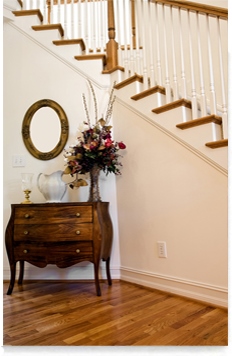
Entrance ShadowTransforming your foyer from a dumping ground into a grand entrance is easy! Here are a few ways to create an amazing first impression in an area that typically will experience a lot of wear and tear:

  1. Clear Clutter - A chaotic looking hallway will turn people off so remove clothing that is no longer in season. Organize hats and scarves in stylish baskets and stack footwear in an orderly fashion.
  2. Lighten Up - Foyers are usually fairly dark so clean light fixtures and use a brighter bulb to cast more light. Painting the walls a light shade will open up the area and with a strategically placed mirror it will create the illusion of additional space.
  3. Add Some Style - Check out antique markets or yard sales for unique pieces of furniture. A small bench for guests to sit on while taking off their shoes works well for larger areas while a small table to catch keys is perfect for compact spaces.
  4. Spruce It Up - Breathe some life into your gloomy hallway by adding a few plants and even fresh flowers.


Stylish Type

Stylish ShadowThe trend of extending the indoors outside is as popular as ever!

Extending your indoor space outside will add value, comfort and style to your home. Here are a few inexpensive ways to transform your yard from dull to dazzling:

  • Dress up furniture with bright outdoor pillows
  • Add charm with a piece of up-cycled furniture
  • Hang outdoor solar lights on tree branches or in the ground
  • Accessorize with candles, lanterns and ornaments

It is easy to add some style to your garden without spending a fortune -- just use your imagination! Not only will you be able to enjoy the great outdoors but it’ll also increase your home’s resale value when it comes time to sell.


Manufactured Type

A manufactured home is a home that is built in a factory and transported to a building lot where it is placed on piers or a foundation.

Manufactured ShadowManufactured homes used to be known as “mobile homes” or “trailer homes”. These terms have faded away in favor of the term “manufactured homes”.

Manufactured homes are built on a non–removable steel frame chassis. The concept is that the entire home is built in the factory, on a chassis so that it can be rolled on its own wheels to the site. If the home were not a complete unit but rather panels or modules that are assembled on site, the structure would have to be built in compliance with the local building code. Since the home is built as a complete and moveable unit, the factory can build the home to a single standard.

If a garage or a deck or addition is added to the manufactured home, the local code applies.

The following factory built homes are NOT the same as “manufactured homes”. They are built in a factory but must comply with the local codes where the home will be located –

  • Modular home: A modular home is a home that is built out of pieces that were manufactured in a factory. Many modular homes have full basements and attached garages.
  • Panelized home: A panelized home is built from factory built panels. The panels are walls with windows, doors, plumbing and wiring already in them. The panels are transported to the site and assembled into a home.
  • Pre-cut homes: Pieces of the home are cut to size in a factory to facilitate easy assembly on site. Log home building kits, for example, include all of the pieces pre-cut and ready to assemble on site.

Single Section versus Multi-Section

Years ago, most manufactured homes were single section homes. They tended to be long and narrow, a necessity for transportation. Today most are multi-section. That is two or more sections are towed to the site and placed together. Multi-section manufactured homes open up the possibilities for more interesting floor plans. The long narrow look is no longer required.


Pizza Type

Pizza ShadowThe pizza topping that keeps you coming back for more reveals insights into more than your taste buds; it gives a glimpse into your psyche.

Pepperoni: You’re a charmer.
Your saucy vivaciousness ensures there is never a dull moment when you are around.

Meat-Lover’s: You’re a sassy leader.
Full of energy, you’re a pro at taking the reins and seeing any project through to perfection.

Veggie: You’re grounded sage.
Serene and self-confident, you remain calm in the face of challenges.

Just Cheese: You’re a happy optimist.
You light up every room with buoyant energy and don’t need any fancy frills to be satisfied.

Pineapple: You’re a free-spirited innovator.
You’re one-of-a-kind and and an inventive spark.


Olive Type

Olive ShadowOut of the kitchen, olive oil can be put to good use on personal or household chores.

  1. Polish wood furniture with a teaspoon of oil and using a soft rag.
  2. Lubricate measuring cups and spoons for easy cleanup of sticky ingredients like honey, grain mustards and syrup.
  3. Control hair frizz by combing a bit of olive oil through dry hair to tame the frizz and fly-aways.
  4. Remove paint from your skin by applying a small amount of olive oil. Rub in gently. Scrub with a dry cloth.
  5. Fix a squeaky door by using a rag or cotton swab to apply olive oil to the top of a problematic hinge.


Recognizing Type

  • Look for the metal certifying plate on the exterior. All manufactured homes since 1976 will have this. The plate will indicate that it was built and inspected in compliance with the HUD code.
  • Look for a data plate indicating date of manufacture. This is often attached to the breaker panel or near the breaker panel. It may also be inside a kitchen cabinet on in a bedroom closet.
  • If you can see under the structure, you can identify the steel chassis, the towing tongue and perhaps where the wheels were attached when the unit was towed to the site.

House Watch Sub

CLICK HERE FOR A PRINTABLE PDF

Share This Month's ePostNotes Issue:
Pillar To Post Logo

(800) 294-5591
pillartopost.com

More Pillar To Post INFO

Copyright Pillar To Post ® 2017
If you would like to use any of this content for your own use, please contact marketing@pillartopost.com

Fall Home Maintenance with Pillar To Post

The days are getting noticeably shorter, and maybe there’s a nip in the air – sure signs that fall is on its way. Now is the perfect time to get your home in shape before winter rolls in, while the weather is still pleasant enough for spending time outdoors.

Seal it up: Caulk and seal around exterior door and window frames. Look for gaps where pipes or wiring enter the home and caulk those as well. Not only does heat escape from these openings, but water can enter and may eventually cause mold problems and even structural damage.

Look up: Check the roof for missing or damaged shingles. Winter weather can cause serious damage to a vulnerable roof, leading to a greater chance of further damage inside the home. Although you should always have a qualified professional inspect and repair the roof, you can do a preliminary survey from the ground using binoculars.

Clear it out: Clear gutters and eaves troughs of leaves, sticks, and other debris. Consider installing leaf guards if your gutters can accommodate them – they are real time savers and can prevent damage from clogged gutters. Check the seams between sections of gutter, as well as between the gutter and downspouts, and make any necessary adjustments or repairs.

No hose: In climates with freezing weather, drain garden hoses and store them indoors to protect them from the elements. Shut off outdoor faucets and make sure exterior pipes are drained of water. Faucets and pipes can easily freeze and burst, causing leaks and potentially serious water damage.

Warm up time: Have the furnace inspected to ensure it’s safe and in good working order. Most utility companies will provide basic inspections at no charge, but there can often be a long waiting list come fall and winter. Replace disposable furnace air filters or clean the permanent type according to the manufacturer’s instructions. Using a clean filter will help the furnace run more efficiently, saving you money and energy.

Light that fire: If you enjoy the crackle of a wood-burning fireplace on a chilly fall evening, have the firebox and chimney professionally cleaned before lighting a fire this season. Creosote, a byproduct of wood burning, can build up to dangerous levels and cause a serious chimney fire if not removed.

Happy Fall to you from everyone at Pillar To Post Home Inspectors.

Water Quality in the Home

Community water systems are required to test and monitor drinking water supplies to ensure safe and good-tasting water. But what happens once the water has been piped into towns, neighborhoods, and homes? Older homes may still have service lines made of lead going into the home, which can cause lead to leach into the water. The local water supply system should be able to confirm the presence of lead service lines for homeowners. Older fixtures that contain lead, or lead that was used to solder pipe joints, can also cause elevated lead levels. Whenever possible, pipes and fixtures containing lead should be replaced with new materials.

Many homes built before the 1960s have galvanized steel pipes. While galvanized pipes do not create chemical contaminants on their own, they are susceptible to severe corrosion which can flake off and clog taps and faucets. In some instances lead can build up inside galvanized pipes, especially if the service line into the home is or was made of lead. To be on the safe side, it is best to have all galvanized piping replaced.

Another water quality concern is what are known as emerging contaminants, which, if present in a home, usually occur in very low level amounts. These fall into two general categories: health effects and aesthetic effects. Emerging contaminants affecting health include detergents, pesticides, and medications. Other contaminants that don’t affect health may adversely alter water taste, odor, and/or color. Home filtration systems are the most common means of reducing emerging contaminants. Options include faucet or pitcher filters, plumbed, and reverse-osmosis filters that treat the entire home’s water supply. Any filtration system considered should be listed as meeting national standards for reducing multiple contaminants.

Well Water Quality

While most people in North America get their water from community water systems, there are still millions who rely on well water at home. Water sourced from a well should be tested on a regular basis for contaminants such as bacteria and metals. If well water coming from the tap tests high for lead, it could be that the water in the well is too acidic, which causes lead to leach from pipes and fixtures. An acid neutralizing system can usually alleviate this problem without the need to replace pipes and fixtures. Other possible well water quality problems can be avoided by making sure wells are located away from septic tanks, livestock, and pooling water runoff. Well maintenance should not be overlooked, so that any issues can be addressed before they cause health problems for the home’s occupants.

Water quality can easily be tested for metals, bacteria and other contaminants. Contact your local Pillar To Post Home Inspector for more information about this and other added services available.

Pillar To Post Newsletter July 2017

Pillar To Post blog post

Pillar To Post welcomes your comments and concerns. You can contact us: Click Here

If there is one question that defines whether we will have a full-filling life experience or not it is “Are You Willing?”

We often have goals, desires, and dreams that we long for. We speak of changes we’d really like to see in our lives:

  1. New career
  2. Richer relationship
  3. More self-confidence
  4. Optimal health
  5. Financial wealth
  6. Great happy home
  7. A secure peace of mind
  8. Just about anything you may think of.

It all boils down to our willingness. The difference between success and failure; happiness and misery can be found in our level of resistance and willingness to be fully present, take action, make a change, shift our thinking, or take a risk.

If you’re not willing, you can be 100% certain of the results and your experience. It will look exactly as what you’re experiencing right now. If you keep doing the same things you’ve always done; you’ll always get what you’ve always got. Or, so the saying goes… In order to be fully alive you have to be willing. Willing to feel whatever you’re feeling - the good, bad, and ugly. You also need to be willing to show up fully for yourself and others every day no matter what.

Consider some of these as they apply to your life. Are You Willing to:
Live with your heart wide open and experience great love?
Take action toward your desires even when you don’t feel like it or are scared?
Follow your own heart and integrity even when it is unpopular?
Live with your heart wide open even when experiencing sadness, hurt, or loss?
Feel the full range of emotions that exist without judging them?
Move forward, fall, get up, win, lose, succeed, fail, get back up and keep going?
Keep the faith regardless of what happens?
Be vulnerable?
Take a risk?
To say “no” when you mean “no”?
Get quiet, get out of your head and into your heart?
Be still and simply listen to your heart?

For the next few weeks, just notice where in your life you are willing and where you are not. Notice where you are open and where you are closed off. Is there any correlation between the areas where you are closed off and unwilling and the frustrations or lack of progress you are experiencing? What would it take for you to simply open up and be willing? Play with the idea a bit more knowing that it is safe to be willing and see what shifts for you.

Paula G.


Improving your home’s air quality is easier than you might think.

The term “air quality” is usually associated with outdoor air pollution caused by cars and factories. The truth however is that the toxins in our home can be just as dangerous.

Hazards include pet dander, dust mites, nitrous dioxides, formaldehyde and fungi. Fear not though as there are a variety of ways to improve your home’s air quality such as:

  • Let It Out - Properly ventilate your home with exhaust fans and open up your windows whenever possible.
  • Natural Air - Houseplants such as peace lilies and spider plants will soak up toxins and naturally purify your home’s air.
  • Humid House - Purchase a humidity gauge so that you can monitor and adjust your home’s humidity levels.
  • Clean Green - Use natural cleaners such as lemon juice, vinegar and baking soda instead of toxic chemical cleaners.
  • Furry Friends - Brush pets outside and wash their beds on a regular basis to control hair and dander.
  • Fresh & Clean - Mix up homemade air fresheners instead of using synthetic ones full of chemicals.
  • Tread Lightly - Carpets trap irritants which can be especially harmful to children so vacuum regularly and place doormats at each entrance.

Implementing just a few of these ideas will make a huge difference.


It can be fun to follow the latest home and garden trends. Here are a few of the latest trends to entertain:

  1. Shedquarters - A “shedquarter” is a private, backyard spot that can be used as an office, artist workspace or even a party area.
  2. Docking Stations - Small, pull down desks can be added almost anywhere as wireless technology enables us to shift away from traditional home offices.
  3. Vintage Vanities - Putting your bathroom sink on just about anything is huge this year! Old dressers, filing cabinets and even tree trunks can be converted into unique vanities.
  4. Laundry Love - Homeowners are giving their laundry rooms some serious love with innovative storage solutions, bright lighting and even stylish wallpaper!
  5. Smart Windows - Cutting edge window technology now allows our windows to be programmed according to the weather outside as well as the air quality inside.

Just like fashion, home trends can come and go, so it’s important not to overcommit. Hopefully these ideas have given you some inspiration.


When selling your home, it’s often the small things that make a huge difference. Storage can be a critical factor for buyers so here are two simple tips that will make your home seem larger:

  • Remove at least half of all items from closets, shelves and cupboards so they appear larger and get rid of anything on the floor. Use the same matching hangers (no wire!) throughout.
  • Organize the remaining items so your closets and cupboards look tidier. Make sure to neatly fold up towels and linens and use attractive bins and boxes to organize any loose items.

The points above may seem obvious but they’re often overlooked. Remember that storage space sells and if buyers see your closets bursting at the seams, they’ll assume your home isn’t big enough for you or for them.


A high relative humidity in your home encourages mold growth and dust mites, can make your house smell musty, and can potentially damage your home and your possessions. In simplest terms, “relative humidity” refers to the amount of dampness in the air. This Pillar To Post® Info Series offers suggestions for addressing high humidity.

Control Humidity at the Source

Whole House High Humidity

Lack of ventilation - Newer homes are “tight”, meaning well-sealed, restricting ventilation. Without fresh air circulation, humidity builds up inside your home (only an issue during heating season when the windows are closed).

Oversized central air conditioner - Central air conditioning is an excellent dehumidifier. An oversized central air conditioner, however, has on-cycles that are too short to effectively remove humidity.

Caution - A gas-fired appliance not venting properly may cause high humidity. If you have any doubt, immediately contact a qualified heating contractor to investigate.

Localized High Humidity

Overcooling - If an area, such as a basement, gets too much cold air supply, may create condensation and a high humidity problem. Adjusting the supply registers prior to the cooling season may help.

Clothes dryer discharging into house - This situation creates a huge source of moisture concentrated in a small area. Clothes dryers should discharge to the exterior even in winter. Verify that the discharge pipe is clear and connected properly at the back of the dryer.

Bathroom fans - Showers and baths add a great deal of moisture. Install an exhaust fan.

Basement dampness - Before you crank on a dehumidifier, find the moisture culprit and reduce or eliminate it at its source.

Crawlspace dampness - Put a sheet of plastic covered in sand or gravel over a dirt floor crawlspace to keep the dampness down.

Dehumidifier - A dehumidifier may be your only way to control moisture in a damp area. A dehumidifier removes moisture from the air and drains the liquid into a reservoir or drain. If the room is colder than 65 °F (18 °C) the dehumidifier may ice up. In this case, shut off the unit until it has defrosted then turn it back on. You may also have to increase the temperature of the space. Some units will operate down to about 42 °F (6 °C) and automatically defrost when they ice up.


The summer fruit you favor does more than just refresh you - it also reveals key insights into your personality. Find your favorite fruit to see what it says about you . . .

  • Pineapples: You’re unique and alluring. You possess a style that can’t be replicated.
  • Cantaloupe: You’re mellow and down-to-earth. Easygoing and laid-back, you exude mellowness and are loved by all.
  • Peaches: You’re a true sweetheart. You were born with nurturing instincts and an effortless intuition of the needs of others.
  • Strawberries: You’re a charming crowd-pleaser. You are an open book, unafraid to let your authentic personality shine.
  • Cherries: You’re an irreplaceable creative. Your originality and passion mean you are often found shining in creative pursuits.


Load up on lemons if you’re searching for a powerful, friendly environmentally cleaner that can tackle virtually any household chore!

Here are just a few ways to make your home naturally sparkle:

  • Lemon juice is great at absorbing stains on countertops.
  • Soak carpet stains for 20 minutes then rinse and blot.
  • Mix lemon juice with baking soda to create a scouring paste.
  • Heat a bowl of water with sliced lemons in the microwave for a few minutes before wiping it down.

Lemons are an excellent alternative to toxic cleansers plus they’ll fill your home with a refreshing citrus scent!


You can measure humidity levels with an inexpensive device called a hygrometer, easily obtained at any hardware store. Take a measurement in a few areas to see if the problem is localized, or if the house is humid throughout. A humidity level of 50% is normal for the summer. In the winter, the ideal indoor humidity depends on the outdoor air temperature and may be 30% or less on colder days.

CLICK HERE FOR A PRINTABLE PDF

Share This Month's ePostNotes Issue:

(800) 294-5591
pillartopost.com

More Pillar To Post INFO

Copyright Pillar To Post ® 2017
If you would like to use any of this content for your own use, please contact marketing@pillartopost.com