Pillar To Post
welcomes your comments and concerns. You can contact us: Click Here
I’ve been spending more time than I care to at the chiropractor’s office lately.
Turns out the nagging pain in my right shoulder is linked to the weight of my
purse. My problems started when I bought an over-sized purse and began to put
more and more items in it because there was space. Can you relate?
And it’s not just women that are lugging around too many belongings; how many
times have you seen men sitting lopsided on their bulging wallets?
If you are ready to put a stop to the madness and save your sanity and your body,
try these tips to get your purse and/or wallet organized quickly and easily.
Organize Your Purse
1. Purge your purse, pare down to essentials. Carry only what
you need; you can always keep non-essentials in your car or in your desk.
2. Lighten the load by carrying a smaller purse. Choose a wider
purse over a deep one to avoid archaeological digs. Look for one that has
pockets for your cell phone, your glasses, etc.
3. Break items down into categories like grooming (lip balm,
comb, powder), health (aspirin, antacid, tissues), and office (notepad, pen).
Store each category in its own small, clear, zippered bag which can quickly be
transferred from purse to purse.
4. Conserve space by carrying travel sizes of items like hand
cream and aspirin.
5. Maintain your system. Once a week, clean out your purse by
emptying out scraps of paper, abandoned mints, and used tissues. You can do this
waiting for appointments.
Organize Your Wallet
1. Purge the excess. Pare down to essentials. Carry some cash, a
debit card, a credit card, driver’s license, and perhaps a health card (often,
just having the number is enough).
2. Store it elsewhere. Keep discount cards, coupons and gift
cards in the glove compartment of your car instead of your wallet. Keep
seldom-used credit cards in a secure place at home. Limit the amount of photos
you carry.
3. Lighten the load by carrying a smaller wallet. Once you edit
out the excess, a smaller wallet will prevent the temptation to accumulate
months’ worth of receipts and other scraps of paper.
4. Be prepared. Photocopy all the cards you carry in your wallet
and keep a copy at home in case your wallet is ever stolen.
5. Maintain your system. At least once a week, clean out your
wallet by emptying out scraps of paper, business cards and other odds and ends.
You can do this effortlessly while waiting for appointments. Use a mini
accordion file case, a basket or a box to organize and store receipts at home.
A Certified Professional Organizer®, life coach, TV Host and owner of We Organize
U. visit www.WeOrganizeU.com or e-mail info@WeOrganizeU.com
Research shows that compact fluorescent light bulbs (CFLs) use 75% less energy
and last 10 times longer than traditional incandescent bulbs. But if you are not
using them correctly, those savings could go right out the window. Here is how
to get the most of your CFLs to keep the money in your pocket.
Stick to the 15-minute rule. Traditional bulbs saved money
by turning them off when not in use. With CFLs, it is better to keep the
light on if you’re going to need it again within 15 minutes. Frequent
turning on and off wastes energy and makes them burn out faster.
Make sure they match. Each CFL is specially designed to
work in specific types of lighting fixtures. Double check the package to see
if it is for dimmer switch, three-way lamp, timer, motion detector or
outdoor lighting etc.
Give them room to breathe. CFLs are sensitive to extreme
temperatures, so place yours in open fixtures - such as lamps with shades
rather than globes. Using them in enclosed fixtures can create a hot
environment that reduces the lifetime of your bulb.
TIP: Avoid breaking a CFL as you install it by holding it
only by the white plastic part - never using the glass tubing, which can
crack when handled.
Who can resist the charm and character of an older home? Before you buy, here are
some common issues that may prevent you from securing insurance.
Wiring: Knob and tube wiring, may be considered a fire
risk. If a home inspector finds this wiring, the insurance company may
require updating the electrical system.
Galvanized or Lead Pipes: These older pipes are more
susceptible to rust build-up and blockages. Because of the risk of flooding
from bursting pipes, you may need to upgrade to modern copper or plastic
pipes.
Heat source: Details will be required about age, location
and condition of oil tanks, often used in older homes for heating
Wood Stoves: Often the source of house fires and carbon
monoxide poisoning, wood stoves will most likely need to be inspected before
an insurance policy will be confirmed.
Moving into your first home or downsizing after your children have left the nest?
Here are a few ideas for making the most out of your new - smaller space.
THIN IS IN Modern
technology has made it easier to get more into small spaces. A flat
screen television can hang on the wall, eliminating the need for an
entertainment unit.
LAP IT UP Using a laptop instead of a desktop
computer allows you to transform any area into a workstation,
whether it be the kitchen table or a comfy chair.
IN THE KITCHEN If you have a small kitchen you
might have to forego some large appliances. Try a compact French
press, rather than a counter-hogging coffee maker. And nix the
cumbersome stand mixer for a handheld model.
ON THE DOCK Ditch that giant stereo system for a
compact docking station for your MP3 player. You won’t be
sacrificing space or sound quality.
It might surprise you to hear that the air inside your home is often dirtier than
the air outside. That’s because indoor air is made up of outdoor air plus all
the pollutants and allergens generated from cleaning products, pets, dust,
smoke, and so on. Fortunately, you can improve indoor air quality in ways that
do not cost a small fortune.
Get the Dust Out Dust – a major irritant – includes lint,
bacteria, pollen, plant and mold spores, pet dander, etc. You can reduce dust
particles in the air in a number of ways. Here are three:
1. Clean or replace the furnace filter every three months.
Pillar To Post® inspectors find that most homeowners do not keep up with this
task. Thick-media filters, such as the five- and six-inch pleated type, last
longer than regular filters and filter better too. Of course they are more
expensive.
2. We all create an invisible dust cloud just walking through
our homes. While a high quality furnace filter will reduce dust, frequent
cleaning and vacuuming is also necessary, but only if your vacuum cleaner is up
to the task.
3. A poor-quality vacuum cleaner can also create dust clouds.
Before you give up on vacuuming, however, two solutions can address this
problem: either install a central vacuum system with the canister-air discharge
piped outside the house, or purchase a high-quality, portable vacuum cleaner
with a HEPA filtration system. HEPA stands for High Efficiency Particulate Air
filter. Whichever solution you choose, both will effectively decrease the amount
of dust that spews into the air when you vacuum.
Control of Humidity High humidity levels in your home can
significantly contribute to mold and dust mite growth. Dust mites, however, are
a fact of life; you cannot eliminate them entirely. But you can decrease their
numbers. Dust mites thrive in humidity levels above 50%. Ensuring the humidity
in your home is not higher than 50% will diminish dust mite growth. Here are a
few ways to address humidity.
1. Buy an inexpensive hygrometer to measure the indoor humidity
2. Ensure that your clothes dryer vents to the outside
3. Bathroom and kitchen fans should direct shower, bath and
cooking moisture outside
4. Fix basement leaks and deal with condensation issues
5. Air conditioning systems and dehumidifiers can also remove
moisture from the air. Keep in mind that dehumidifiers use a great deal of
electricity and don’t provide any cooling. Make sure you deal with obvious
sources of moisture first.
More Efficient Air Exchange Some homes just need more
ventilation. Heat-recovery ventilators, or energy-recovery ventilators are both
effective ventilation devices. Some do-it-yourself systems exist out there but
we strongly suggest an expert consultation. Choosing the right system involves
careful consideration of your home and your specific situation.
Improving air quality in the home is a goal that is easily attainable. Start with
the little fixes and then undertake the more complex remedies as needed. You
don’t have to spend a lot of money to improve the air you breathe.
Feel guilty about surfing the Web, watching TV or playing games? These everyday
habits are actually strengthening your brain power.
Chewing gum fires up focus. Pop a piece before a presentation to
increase blood flow to the brain by about 25% and be more alert.
Watching TV perfects your “people-reader”. Enhance your ability
to read people and increase your emotional intelligence (EQ) by watching sitcoms
to view people’s behavior and the results they get.
Surfing the Web makes you a better problem solver. Spend one
hour surfing, social networking or reading the news and boost your ability to
solve complicated problems.
Texting improves mental sharpness Improve hand-eye coordination.
The quick response time trains your brain to think faster.
Don’t throw away that old newspaper until you have made the most use of
it. Try these great uses.
Remove fridge odors. Crumble a few pieces of newspaper and
place them in the produce bins and the back of your fridge for three days.
It will absorb the odors.
Dry wet boots. Quickly remove moisture and dampness from
you wet boots by stuffing the insides with crumbled newspaper.
Clean windows. Dampen your window’s surface and use folded
newspaper to rub away spots and leave them streak-free
Safely clean up glass. When you shatter a glass after
picking up the large pieces, dampen a folded piece of newspaper to blot up
smaller shards. They will stick to the paper.
Wrap gifts. In place of expensive wrapping paper use the
funny pages to wrap children’s birthday gifts. It is a fun way to recycle
paper
The chemicals we use in the home contribute
significantly to poor indoor air quality.
Here are 4 tips to take control of the chemicals in the air:
1. Get rid of products you no longer need, such
as old paint cans and other open and half used toxic chemicals
and poisons.
2. Opened bottles and jars of cleaning products
should be contained in an airtight bin.
3. Consider using less toxic and more
environmentally friendly cleaning products.
4. Dry-cleaned clothing spews chemicals into the
air. If possible, remove the plastic and hang the stack of
dry-cleaning outside for a few hours before bringing it into the
house. Of course this may not be practical and we sincerely hope
your clothing does not get stolen.
Homeowners can take a number of steps to get their home ready for inspection – and help avoid some basic problems that could negatively affect the inspection report or impede the progress of the inspection itself.

The chimney and fireplace should be professionally cleaned prior to the inspection. Check for cracked or loose masonry and ensure that the cap or spark arrestor is in good condition and working properly. Likewise, have the furnace inspected for proper functioning and to have any problems fixed in advance of the inspection.
Permits and plans for major renovations should be available to prove that such work was done legally. Unpermitted work will need to be disclosed as part of the transaction process.
Access – The inspector will need to have access to any locked areas such as storage sheds, garages, gates, etc. Either leave these unlocked or make sure the keys are available to avoid delays.
There will be times in your life when you will question your thoughts or actions.
To whom are you listening? This may be one of the most difficult questions you
have to answer more than once in your life. However, when you determine the
sources, your actions will make more sense.
You Have a Choice The purpose of this question is for you to
understand that you have a choice. You can listen to the rational voices or you
can listen to the irrational ones. You can choose to listen to positive voices
or negative voices. If you are faithful, you may be challenged with a choice
between the ”angelic” voice or the ”devilish” voice. You will, however, notice
in all of the above situations that you and you alone have the choice of which
voice to listen to.
Choice is Accompanied by Responsibility When you have the
ability to choose, you must also accept the responsibilities that come along
with your choices. Some choices may not result in favorable outcomes.
Understanding this and learning from the lessons that such choices may carry
will enable you to grow and thoroughly improve your decision-making skills in
the future. Don't fall prey to the blame game. Too often, many will listen to
the ”wrong” voices and make decisions that are detrimental not only to
themselves but to those around them. Blaming others or circumstances does not
remedy the situation. However, owning up and taking responsibility will empower
you and help you move on.
Let Go and Move On Letting go may seem very difficult, moving
forward even more so. However, it can be done and many more times than once.
Depending on the voice you are listening to, you may be challenged with letting
go. Whew! Is that difficult? Oh yes, and I would be misleading you if I told you
that it is an easy decision. Again, you will always be faced with decisions in
your life. Some may be as easy as choosing flats over high heels or a striped
tie over a solid. It may become a bit more difficult when choosing fresh fruit
or a decadent pastry and even more difficult when the decision concerns the
welfare of your family. The point is that you and only you can choose what voice
to listen to. This little voice in your head that is directing you toward making
or not making a huge investment is one that cannot be easily shut off.

I'm not here to tell you to shut it off; I'm here to simply tell you that we all
have the same little voice in our heads. You are not alone on this adventure
called life.
You must take responsibility for your actions.
You must learn from your choices and never, ever stop learning.
Those who think they know it all are the ones who will have difficulties owning
up or taking responsibility for the choices they have made. You can be
different! Correction, you MUST be different. You were created for greatness,
and once you accept this as truth, you will understand the reasons behind the
choices you may have made or will be challenged with in the future.
So my question for you stands: to whom are you
listening?
Not having hot water is not fun. If left unchecked and your pipes freeze it could
mean even bigger troubles. So is this something you should try and fix yourself
or a project best left for the pros?
Getting Your Gas Water Heater Back On:
Check to make sure the gas is actually on.
Check the pilot light.
If out, follow the instructions on your heater to relight it.
If the pilot light won’t stay lit, you can replace the thermocouple (the
copper wire hanging down to the pilot light) for less than twenty dollars,
using only a small adjustable wrench.
If this doesn’t fix your problem, call a plumber.
How to Fix Your Own Electric Water Heater:
Check that you have electricity and breakers haven’t been tripped.
If that didn’t solve it, make sure to turn off the breakers to the water
heater before going any further!
Remove the access cover on the water heater and locate the reset button. If
you are lucky, you will only have to reset it and turn the power back on,
and you’ll be all set in an hour.
If not, power off the electricity
again, get your hands on a voltage meter, locate the heating
elements, and check for continuity in the circuit. If this fails, you’ll
want to replace both elements. This requires draining the tank and possibly
a special socket that can be found wherever you buy the elements.
If the elements are fine, it is probably your thermostats that are the
issue. These can be quickly and easily changed by removing the wires and
connecting new thermostats.
Only attempt these DIY projects if you feel comfortable. Dealing with gas and
electricity can be deadly. However, with a little effort you can also save
yourself a lot of money.
Whether you just have a free weekend and a few hundred dollars to tackle one room
or hundreds of thousands to give your entire home a new look, the following
eight steps will help you make your money go a lot farther.
1. Begin Your Wish List Pick out design styles you’d like ,
and listing all of the things you would remove, change, or add if you could.
2. Identify Your Real Budget Come up with a realistic budget
with which you are completely comfortable.
3. Price Shop Look up prices of everything on your wish list
and get several quotes.
4. Prioritize Make a list of what you can really afford and
which items are the most important.
5. Create Your Re-Decorating Plan Include tasks, items to
purchase, timelines and the order in which things will be done.
6. Be Ready to Make Smart Adjustments Invest in big items
that will last or add to the value of your home and make adjustments to the
other items on your list. Don’t keep stretching your budget; make trade-offs
instead.
7. Plan for Overages Allow for 10–25% in extra expenses.
8. Be Willing to Work in Phases Don’t run yourself ragged,
break up your ideas into phases.
This is the ideal solution for sprucing up your home to prep it for sale, wowing
visitors, or even just fighting off the winter blues.
1. Rearrange Start by
rearranging. Make your spaces flow better and give the appearance of
greater openness. Decide which items need to go or to be
upgraded.2. Where’s the Focus? For each room,
choose focal points that you will center your budget on; for
example, the fireplace mantel, dining room table, or master bed.
3. Use what you’ve got Artwork, kids’
creations, sculptures, and heirlooms can all be used to fill
these focal points without breaking out the credit card, and all
while providing a more personal feel.
4. Let the Style Go Wild If trendy and exotic
is what you are looking for, then think window treatments,
lighting and shades, or replacing hardware to breathe new life
and class into your home.
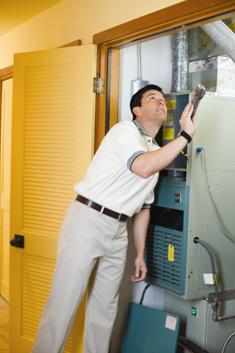
The forced-air gas furnace is the most common heating system in North America. It
has undergone many improvements over the past few years making them efficient,
quiet and reliable.
Efficiency Most of the heat generated when a gas furnace
burns goes into the house, but some of the heat goes up the chimney. Furnace
efficiency refers to the amount of heat delivered into the house relative to the
total amount of fuel energy used. Another way to look at it: if you burn $1
worth of gas and you get 80 cents worth of heat into the house, your furnace is
operating at 80% efficiency. This quotient is often called AFUE, or annual fuel
utilization efficiency.
Furnaces are classified into three efficiency categories, each correlating to a
specific design: conventional, mid, and high efficiency designs.
Conventional A conventional furnace is the oldest type and is
generally 55% to 65% efficient. In other words, a great deal of heat is lost up
the chimney during the operation of the furnace. Conventional furnaces are no
longer made but many still exist in homes.
Mid Improvements in design led to the mid-efficiency furnace,
operating at around 80% AFUE. The big development, the induced draft fan, sucks
the combustion products through the furnace and discharges them into the flue.
No longer reliant on natural draft to run, the heat exchanger design was
optimized in order to extract more heat before the combustion gasses went up the
chimney.
High Further developments in furnace design led to the modern
high-efficiency furnace, operating at an AFUE of 90 to 97%. A high-efficiency
furnace has two heat exchangers, the second’s job being to condense the gases,
thus extracting most of the heat that would otherwise have been lost up the
chimney.
Other benefits of a high-efficiency furnace:
Does not require a chimney: since most of the combustion
gases are condensed and trickle down the drain, the remaining (fairly cool)
gases can be vented through a plastic pipe directly through the wall of the
house.
Doesn’t burn house-hold air: combustion air is drawn
directly from the outside through one plastic pipe and a second plastic pipe
discharges the remaining combustion gas to the exterior.
Ever find yourself becoming resentful or upset because you
have too much on your plate? Ever find yourself bitter about doing what you
“have to do” instead of what you really want to do?
Five Ways to Reduce Stress and Create More Peace:
Simplify your methods so the task isn’t so challenging.
It’s OK to say no if you can’t do it comfortably or happily
Don’t be afraid to ask for help.
Reduce your to-do list—some items just aren’t that critical.
Make trade-offs—block more “me time” next week and don’t let it be
interrupted.
4 More Ways to Reduce Stress and Create More Peace:
Simplify your methods so it isn’t so challenging
Don’t be afraid to ask for help
Reduce your to-do list – some items just aren’t that critical
Make trade-offs – bock more ‘me time’ next week and don’t let it be
interrupted
We are now so obsessed with material belongings that there are even television
shows about hoarders who jeopardize their homes and health with their compulsive
buying habits and yet still can’t bear to give up any of their possessions.
Of course, your situation may not be this dire, but if you want to spruce up your
home, a good start may be getting rid of some of the clutter. How many things do
you own that you haven’t used or worn in the last three months? You probably
don’t need them.
Feeling wealthy and great about yourself shouldn’t rely on keeping up with the
Jones’s. What can feel a lot better is the peace of mind of having a little more
living space, knowing that you are financially secure, and having time to relax.
Wouldn’t it be satisfying to be able to experience more: doing more, creating
more amazing memories, and spending more time with those you love?
Living lighter can be incredibly freeing. Ask “homeless” billionaire Nicolas
Bergguen, who refuses to even rent or buy a home and travels the world with his
belongings in a paper bag.
Look for these signs of trouble:
Wood rot: If you see wood rot, it could be
worse than you think. Rotted connections such as the ledger
board and house connection could lead to deck collapse.
Good connections: Check the points of
connection between major components such as the deck and the
house, the guardrail and the deck, the beams and the posts,
and the posts and the pier. You should see plenty of metal
brackets and bolts, not nails.
If in doubt, have an expert look at your deck. For example, it is
very difficult to inspect the deck-to-house connection because
it is not easily accessible. Of course, it helps if you know
what you are looking for.
There are over forty million decks in North America, with over
one million built or rebuilt each year. With care, a deck can
last many years and provide a safe place to enjoy the great
outdoors.
Many of us make optimistic resolutions for the New Year. Whether it’s deciding to take a class, stick to a budget, or to finally drop those 20 pounds, we’re full of ideas on how make ourselves and our lives better. Because your home is such an important part of your life, why not make some worthwhile resolutions for it as well? Here are some ideas to get you started.
KEEP CURRENT ON ROUTINE MAINTENANCE
One of the most important things you can do as a homeowner is to make sure routine maintenance is part of your plan. Catching problems early can often help you avoid larger issues down the road. What is now a minor plumbing or roof leak can cause major problems if not detected and fixed immediately. Check around your home for cracked or peeling paint, have the chimney and fireplace inspected and cleaned, and make sure the driveway and walkways are not cracked or lifting.
UPDATE YOUR HOME INVENTORY
FOR INSURANCE PURPOSES
If you’re like many homeowners, it’s probably been a while since you’ve reviewed your home insurance policy and reassessed the value of your home’s contents. An updated home inventory of your possessions can help you determine if you have the proper type and amount of insurance. Your insurance company may make forms available to help you organize and record your inventory, and there are several home inventory software programs available. You also can download a free program from www.knowyourstuff.org. Should you have an insurance claim for property loss or damage, a current and accurate inventory can help make the process and accurate valuation easier.
AUDIT YOUR HOME FOR ENERGY SAVINGS
There are simple things that every homeowner can do to improved energy efficiency and save on utility bills. Check around your home for any fixtures that still have incandescent bulbs and replace them with CFL or LED bulbs wherever possible. This saves money and makes things easier for you, too; for example, bulbs in awkward places will need replacement far less often. Make sure windows and doors are caulked and in good repair; this will save energy in both winter and summer. If you’re planning to replace any appliances this year, shop for and compare efficient, energy-saving models.
CREATE A FIRE SAFETY PLAN FOR YOUR FAMILY
Everyone knows the importance of having a plan in place should a fire occur in your home. But each year, tragedy strikes homes and families who didn’t think about it or who promised to make a plan “one of these days”. The basics include working and properly installed smoke detectors, fire extinguishers, and an escape plan for every room. Your local fire department is an excellent resource for directions on creating a plan designed to keep you and your loved ones safe. Give yourself some peace of mind by making 2012 the year to put that plan in place.
For more information about home inspection and for additional resources, please contact your local Pillar To Post office.
There are no inspections available with this FBO within +/- 4 days of your preferred inspection date. Please pick another inspection date, or contact us.