Category: Post Notes

Pillar To Post Newsletter November 2015

Pillar To Post blog post


Pillar To Post welcomes your comments and concerns. You can contact us: Click Here


Change is constant. Whether it’s in the workplace or our relationships, nothing in life ever remains quite the same.

Regardless of the gravity of change, it can always be a little scary. So scary, in fact, that some people are downright crippled by the idea of it causing them to remain stagnant in anxiety. We can’t control every aspect of our lives and we can’t stop change from happening. But how we respond to change will greatly affect our overall life experience.

1. Don’t fight it
I once heard one of my favorite yoga instructors say suffering is what occurs when we resist what is already happening. Life changes are usually out of our control. Rather than trying to manipulate the situation and wishing things were different, try flowing with it instead. Some initial resistance is natural if we’re going into survival mode. Just make sure you are conscious of when this resistance is no longer serving you.

2. Find healthy ways to deal with your feelings
Whenever we’re in transitional periods it can be easy to lose track of ourselves. Sometimes we feel like we’re being tossed about by life. One way we can channel these feelings is by finding healthy ways to release them. For instance, whenever I find myself in a difficult transitional phase I find physical activity helps me channel my emotions and release endorphins. It also helps me get in shape which increases my mood and energy levels.

3. Reframe your perspective
Reframing perspectives is a very powerful tool. It helps to take a situation you are struggling with, such as a major life change, and find some sort of empowerment in it.

Examples of disempowered thinking during life changes include casting blame, focusing on negative details or victimizing. These perspectives can make awkward transitional phases much worse than they have to be. Meanwhile if we come from a more positive perspective such as finding a lesson in the situation, realizing that there may be an opportunity for something or that everything passes we can come from a greater place of ease.

4. Find time for self-reflection
Having time to reflect is important at any stage in your life, but it’s especially important during transitional periods. We need our time to step back and get centered when things can get a little crazy.

As a result, big life changes are perfect for doing some self-reflection. They are opportunities to check in with ourselves and practice getting grounded for a few minutes.

Self-reflective exercises include meditating, yoga or journaling - all of which require some quiet time to get yourself together. If handled in a positive manner transitional periods can pave the way for some serious self-growth, reflection and awareness.

Amanda Abella
Freelance writer & life coach

Few people are aware of the danger that clothes dryers can pose which is one of the reasons that dryer maintenance is so often overlooked. Fires can occur when lint (a highly combustible material) builds up in the dryer or more commonly, in the dryer’s exhaust duct. This blockage causes excessive heat to build-up in the dryer.

Some warning signs that your dryer vent may be blocked are:
1. excessive heat in the laundry room
2. a musty smell
3. clothes that are still damp after a cycle
4. a large amount of lint and debris

If you notice any of these signs, it’s important that you take steps to clear your vent right away.

Keep Your Dryer as Lint-Free as Possible
1. Use a lint brush or vacuum attachment to remove accumulated lint from under the lint trap and other accessible places on a periodic basis.
2. Every 1-3 years, have the dryer taken apart and thoroughly cleaned out by a service technician.
3. Clean the lint trap after each load.

If you regularly clean out your dryer’s exhaust vent, you’ll not only significantly reduce a very common fire hazard but you’ll also save money as your dryer will last longer and run much more efficiently.

Before You Go…
1. Never let your clothes dryer run while you are out of the house or when you are asleep.
2. Thoroughly read manufacturers instructions regarding the safe use of their dryers.

If all else fails, you can always go back to an old-fashioned clothesline. There have never been any reported clothesline fires!

Moving can be stressful so planning is the key. The more organized you are, the less stress you’ll endure and the more fun you’ll enjoy!

Start off by packing non-essential items like pictures and books. This is the perfect time to ruthlessly purge your “stuff” and either donate or sell items you no longer need. Here are a few packing tips for the rest of your things:

• Unscrew light bulbs from lamps
• Water plants the day before the move
• Take a photo of how your electronics are connected
• Lay towels between pictures before bundling them up
• Label the sides of boxes so you can read them when they have been stacked

The best way to ensure a smooth move is to write out a plan of action. Make a checklist and a timeline that clearly states what needs to be done.

If you follow these tips, you’ll have fond memories of the last day in your old home - just don’t forget to take one last family photo before you leave.

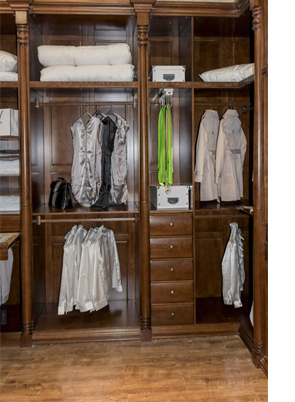
How many of us really know every item sitting in our closets? Once you discover closet cleaning has a science to it, you should find it easier to build it into a positive habit. Here are some tips to tackle your closet without separation anxiety.

1. Focus.
Cleaning out your entire wardrobe in one shot can be overwhelming. Instead of waiting for clothes to pile up, try focused purging. Sort out one drawer at a time, or just try shoes and boots.2. Favor.
Think about the last time you wore those perfect pants. If you can’t put your finger on when, it is probably time to donate and give back to the community.


3. Finalize.
If all your clothes disappeared, what fewer items would you wish were right back in your closet? Once you decide which items are keepers, you should quickly spot the ones you can part with and donate.

The basement is usually the last place people think to insulate, yet it can account for up to 1/3 of heat loss in a home.

Insulation can significantly cut down on energy use. It also creates a comfortable space – a boon to people who wish to extend their recreation and living space into the basement.

Where Should the Insulation Go?
From a building-science point-of-view, it is better to insulate the outside of the foundation. From a practicality point-of-view, however, insulation is easier to apply from the inside, especially if done while renovating.

Here are the exterior versus interior pros and cons:

Exterior Pros
• You can fix any foundation issues at the time.
• Insulation will not take up basement space.
• The foundation itself will be warmer.
• The foundation stays dry inside, reducing or eliminating mold and mildew.

Exterior Cons
• Disruptive and expensive: you have to dig soil to get at the foundation.
• The above-grade portion of the foundation insulation is difficult to finish and protect. Rigid-foam insulation is the most common exterior insulation material, most often finished with stucco, a fragile finish that gets damaged from lawn tools, etc.

Possible fix: use exterior insulation for the below-grade part of the exterior and then insulate the above-grade part from the inside.

Interior Pros
• Much easier to install and less expensive than exterior.
• Can be done while renovating the basement.

Interior Cons
• Foundation wall will be at exterior temperature (cold), making it prone to condensation.
• Any moisture that gets into the wall system does not dry readily, making the wall prone to mold.

Problems with Traditional Interior Techniques
Since interior insulation is by far the most common approach, traditionally, a moisture barrier is applied to the foundation. Fiberglass batts sit against this barrier and then a vapor barrier is applied to the batts on the interior.

Other interior insulation strategies work much better, such as foam-based insulation that is more tolerant to moisture.

The season you look forward to most says a lot about your most alluring traits. If you prefer…

Winter: You are poised yet perseverant. Tenacious & driven you are able to plow through obstacles. Few things, be it a snowstorm or a setback, can keep you down.

Spring: You are a determined optimist. Spring is synonymous with potential - the almost palpable feeling in the air that anything is possible. You don’t quit until all your goals have come to fruition.

Summer: You are an exuberant doer. This is hope fully realized. You bring an exuberant passion to whatever you do and have a spark to your spirit that’s just as bright as summer sun.

Fall: You are multifaceted. Smart & sophisticated you are drawn to autumn’s understated beauty. You know that when fall arrives, there’ll be a cornucopia of fun & pursuits to do.

1. Turn the space under a staircase, in a closet or an attic into a home office. For a custom look, add a desk and built-in cabinets, or just fit in a small table and chair and hang a memo board on the wall behind.

2. Make the most of wasted space above your kitchen sink. Add two wire shelves in the open area above the sink directly between the cabinets. This should make a perfect, safe spot for draining fine china and glassware or for holding soap and sponges.

3. Use kitchen cabinet sides for extra storage space. Hang a metal rack to hold pot lids or a towel bar to hold dish towels.

4. Stack two benches. To create impromptu shelves use the benches to hold books or baskets full of CDs or videotapes.

Deal with dampness first – Most experts agree that you should deal with any dampness issues before insulating the basement from the interior.


Seek out knowledgeable contractors – Do not simply follow traditional conventions. Significant advances in the best techniques for insulating basements mean better results.

Fix basement windows – One of the most effective strategies for improving the thermal efficiency of your home is to seal air leaks. Seal and weather strip basement windows, which are often neglected.

CLICK HERE FOR A PRINTABLE PDF

(800) 294-5591
pillartopost.com


More Pillar To Post
INFO

Copyright Pillar To Post ® 2015
If you would like to use any of this content for your own use, please contact marketing@pillartopost.com



Pillar To Post Newsletter September 2015

Pillar To Post blog post


Pillar To Post welcomes your comments and concerns. You can contact us: Click Here


Please think about this: everything you feel, think, and do is totally your own responsibility.

All your reactions to others and to what they say or do to you are also your own responsibility. And all your reactions to neighborhood, community, and global events are also your own responsibility.

That means there is no one whom you can blame for how you feel about negative things…
Are you having a hard time swallowing that?

No Choice?
“No!” you cry. “I have no choice but to be afraid if I have been mugged, or horrified if I see a war unfolding, or hurt, if someone upsets my feelings. What else could I do? How else could I react?”

Indeed. How else? If you have been mugged, you could choose to take self-defense classes, in order to better protect yourself in future and in order to feel less afraid. You could join a neighborhood watch group to better protect the community.

In the case of war, you could work towards change in government in order to ensure that events of this nature have less and less possibility of repeating, and you could work on your own “war-like” reactions to other human beings in your daily life, in the knowledge that change is created one individual at a time.

In the instance of having your feelings hurt, you could decide to ask yourself why you were in that position in the first place; why that person is in your life, and decide that the best reaction is to look at your own role in the situation, rather than at how much you are hurt.

Not in order to blame yourself, but to ensure that situations of this nature have less and less chance of developing in your life, or that if they do, they will no longer have the power to hurt you. And you might choose not to allow such a person into your life in the first place.

Different Possible Realities? A lifetime is composed of choices. Each choice leads to a probable different possibility or reality. Not choosing is also a choice. The choices an individual makes literally set the scene for much of the joy and misery that subsequently take place in that life.

Are Some Choices Mistakes? Does this mean some choices are a mistake and others are right? That some choices lead you to a better place than others?

Who can Judge? Perhaps the way you ultimately feel about yourself is the benchmark. Evidently if you do not feel good about yourself, it is once again your choice to change that.

Choice and Freedom Choice - and the more we are willing to embrace our right to choose and see alternatives at every turn of the road - brings us closer and closer to the richness of ourselves, to the fullness of responsibility we have for ourselves, and hence brings us closer and closer to a manner of inner freedom that those who choose not to choose will never taste.

Dr. Gabriella Kortsch, Ph.D.
relationship coach, author, and professional speaker.
www.advancedpersonaltherapy.com

Pet odors, smelly shoes, burned food in the kitchen - no need to run out and buy air freshener. There are plenty of deodorizers you already have around the house that can do the job - naturally!

1. Deodorize a dirty disposal with orange peels. Next time you eat an orange, just drop the peel down the sink and turn on the disposal. Citrus rinds contain fragrant essential oils and potent antiseptic and astringent properties that kill odor-causing germs.

2. Send pet odors packing with baking soda. Technically, it is sodium bicarbonate that absorbs odors from both surfaces and air. Simply sprinkle a little on rugs, couches, pet beds and other spots favored by your pooch or feline. Let sit for several hours or overnight, so it can work magic. Remove the powder with a vacuum and all that remains is fresh scent.

3. Say so long to smoke smells. Cigarette odors are tough but white vinegar is tougher! Pour vinegar in a few soup bowls and set around the smoke-scented room - the next day, the smoky stench should be gone. Also smart: Moisten an old towel with vinegar and wave through the room.

4. Zap microwave odors Did you heat your popcorn a little too long, and now the burning smell will not go away? Here is a sweet-smelling solution: Combine 1 tsp. vanilla extract with two cups water in a microwave-safe bowl, then heat on high for five minutes. Vanilla extract is a natural deodorizer that will take away the scorched stench - and replace it with the delicious aroma of just-baked goods.

Wake up your space in an instant with pops of uplifting blue and zesty orange - these complimentary colors are guaranteed to bring positive vibes your way!


1. Small effort, big impact. Bring a white kitchen to life with a mix-and-match theme of exquisite orange shades and blue leather chairs. Accent with a display of edible oranges for a vibrant feel!

2. A bright idea. Cheer up your bedroom with impact by painting your bed posts a sassy paprika hue. Research shows that orange hues are natural “uppers” that can actually boost your confidence.

3. Room to room color. The easy decorator’s trick to create a sense of more space in your home is to let a simple color scheme travel from room to room with little accessories - like dining room to kitchen.

4. Build on a neutral. The key to decorating with blue and orange is to begin with a neutral base. Colors like white, cream or even pale sand provide the perfect backdrop to let vibrant accessories like throw pillows or vases shine.

Here are a few ideas to help create a clean, healthy and sweet smelling bathroom.

1. Spray the tub with white vinegar. Fill a spray bottle and mist all bathroom surfaces. The acetic acid stops mold from growing and kills lingering odors.

2. Natural mildew eliminator. Combine 2 tsp. tea tree oil and 2 cups water in spray bottle. Shake and spray on mold and mildew. This solution should destroy on contact with no need to rinse away.


3. Ditch hidden sources. Toss out rarely used bottles of shampoo - breeding grounds for mold.

4. De-gunk the grout. Dip an old toothbrush in dish soap and use to scrub away mold between tile.

5. Clean shower curtains. Rub curtain with juice from one lemon. Lemon’s natural disinfectant stops mildew growth and eliminates odors.

6. Keep mold away. Apply small amount of car wax to clean shower walls and tiles to prevent mold from growing.

With so much in the news about the dangers of mold in your home, and the associated health risks, it is easy to get carried away with fear.

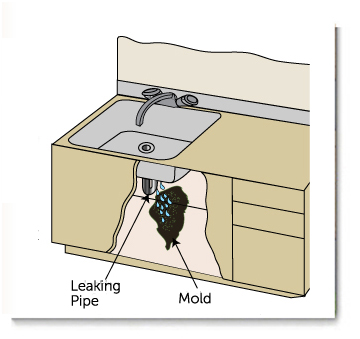
Mold has been with us since the beginning of time. Believe it or not, you already have mold in your house. Leave a loaf of bread on your counter for a couple of weeks and you will see it grow. All mold needs to thrive and multiply is a food source, a little water, and oxygen. Building materials are a good food source for mold spores. Add water (you do not need to add oxygen since it’s everywhere) and you have a mold problem. Water is the key to understanding and controlling mold since it is the only mold-growth factor you can control.

What To Do About Mold
You can clean mold yourself if it appears in small amounts. Mold in absorbent materials such as carpets, is difficult to clean. Better to just throw the carpet out. If you have a flood in your home, it is critical to dry things up quickly. Call in an expert who specializes in flood clean-up. Government web sites offer free and detailed guides on how to clean mold:
Centers For Disease Control And Prevention:
www.cdc.gov
Environmental Protection Agency:
www.epa.gov
Canada Mortgage and Housing:
www.cmhc-schl.gc.ca

Preventative measures
Deal promptly with water leakage in areas such as the roof, plumbing, and basement.
Keep indoor humidity levels at 50% or lower. In cold climates during winter, 50% is still too high.
Make sure your clothes dryer vents to the outside rather than into the house. Check the discharge pipe too, as these pipes often become disconnected.
Use your bathroom ventilation fan when showering or bathing, and leave the fan running for about twenty minutes afterwards. Similarly, use your kitchen range hood to discharge steam outside when cooking.
A central air-conditioning system effectively reduces humidity levels in warm weather. If areas of your home seem humid during air-conditioning season, you may develop a condensation problem. Sometimes adding a return air vent in the damp area, or adding a damper to the ducting that supplies the area, can improve humidity levels dramatically. Dehumidifiers also help.
Mold may be here to stay but it can be controlled. Look for dampness in your home and deal with it promptly.

Whether it is neat and orderly with books and papers, your desk sends clear signals about everything from your creativity to your ambition. Here’s what it means if your desk is:

Neat & organized: You are a success magnet. Detail-oriented and ambitious, your desk is just a stepping stone to the corner office.

Full of family photos: You are a charmer. You are a social star that others find likable and approachable.

Messy: You are a creative genius. A mountain of desk clutter is evidence that you are open-minded, curious and ready for more efficient problem solving.

Full of inspirational quotes: You are a leader. Wise and in-charge, you can be counted on for a smile or stress-busting joke.

1. Choose the weapon. Choose the weapon. Microfiber cloths and Wool dusters attract and hold dust, no dusting spray or furniture polish needed.

2. Clean the screen. Wipe TV and computer screens with fabric softener sheets to reduce dust-attracting static cling.

3. Two-in-one. Apply furniture polish with one side of an old oven mitt and use the other side to buff.

4. Squirt dirt. Squeeze an empty squirt bottle to blow dust out of picture frames corners and other tight spots.

5. Clean cracks. Dip a clean cotton swab in rubbing alcohol and run it through tight crevices, like between the buttons on your phone or remote control.

6. Stop drips. Hang an umbrella upside-down from your ceiling fan or chandelier before you clean it. You will catch dust before it hits the floor.

Molds are organisms which are neither plant nor animal. They are part of the fungi kingdom.


Unlike plants, molds do not get their energy from the sun through photosynthesis. In fact, the sun’s ultraviolet light inhibits mold growth.

Molds also digest or “eat” the material they are growing on. The role of mold is to break down decaying organic matter such as dead plants, leaves or dead animals.

Types of Health Symptoms from Mold
There are three main types of symptoms mold can cause:
Allergic and irritant symptoms, toxic symptoms or even infections.

Mold Removal Products
There are several products you can use to kill and remove mold. Some of the most effective mold removal products include: Bleach, Borax, Vinegar, Ammonia, Hydrogen peroxide, Detergent, Baking soda, Tea tree oil, or Grapefruit seed extract.

CLICK HERE FOR A PRINTABLE PDF

(800) 294-5591
pillartopost.com


More Pillar To Post
INFO

Copyright Pillar To Post ® 2015
If you would like to use any of this content for your own use, please contact marketing@pillartopost.com


Pillar To Post Newsletter July 2015

Pillar To Post blog post

Pillar To Post welcomes your comments and concerns. You can contact us: Click Here

Want to make a huge difference in another person’s life? Want to make a huge difference in your life? Here are things you should say every day -- to your employees, colleagues, family members, friends, and everyone you care about:

  1. “Here’s what I’m thinking.” You’re in charge but that doesn’t mean you’re smarter, savvier, or more insightful than everyone else. Back up your statements and decisions. Justify with logic, not with position or authority. Authority can make you “right,” but collaboration makes everyone right.
  2. “I was wrong.” I came up with an awesome plan to improve productivity by moving a crew to a different shift. Turns out I was wrong. Later one employee said, “I didn’t really know you, but the fact you were willing to admit you were wrong told me everything I needed to know.”
  3. “That was awesome.” No one gets enough praise. Pick someone - pick anyone who does or did something well and say, “Wow, that was great…” Praise is a gift that costs the giver nothing.
  4. “You’re welcome.” Think about a time you gave a gift and the recipient seemed uncomfortable or awkward. The same thing can happen when you are thanked, complimented or praised. The spotlight may make you feel uneasy or insecure. Make eye contact and say, “You’re welcome.”
  5. “Can you help me?” When you need help, just say, sincerely and humbly, “Can you help me?” You’ll show vulnerability, respect, and a willingness to listen -- which are all qualities of a great leader or friend.
  6. “I’m sorry.” We all have things we need to apologize for: words, actions, omissions, failing to step up, show support. Say you’re sorry, say why you’re sorry, and take all the blame. No less. No more.
  7. “Can you show me?” When you ask to be taught you implicitly show you respect the person giving the advice; you show you trust his or her experience, skill, and insight.
  8. “Let me give you a hand.” Many people see asking for help as a sign of weakness. But everyone needs help. Find something you can help with. Say “I’ve got a few minutes. Can I help you finish that?”.
  9.  “I love you.” No, not at work, but everywhere you mean it -- and every time you feel it.
  10. Nothing. Sometimes the best thing to say is nothing at all. If you’re upset, frustrated, or angry, stay quiet. Be quiet until you know exactly what to say -- and what affect your words will have.

Jeff Hayden
Ghostwriter & Speaker


If you’ve fallen under the spell of reality TV’s quick, dramatic transformations of fixer uppers, don’t be fooled into believing that the fairy tale ending is always the case.

Buying a fixer upper is a huge decision that shouldn’t be taken lightly. Here are some considerations to keep in mind if you’re looking at a diamond in the rough:

  1. Pride - If you love taking pride in your work and have the necessary skills, a fixer upper might just be the way to go.
  2. Personality - An older home will give you charm and character and fixing it up means you can add your own personal style.
  3. Inspect the Unexpected - Getting a home inspection is highly recommended so you don’t end up with a structurally flawed money pit.
  4. Getting Your Foot In the Door - Buying a fixer upper can be a great way to get into an area that you may not otherwise have been able to afford.
  5. Strong Foundation - Purchasing a fixer upper with a partner or spouse can put immense pressure on a relationship. The unexpected twists will drain time, money and energy. Living with the mess can also be stressful.
  6. Think Ahead - You may get a great deal but you need to carefully examine whether or not it will be a bargain in the long run. Think like the buyer who will one day purchase your home.

Buying a fixer upper can be an extremely rewarding experience but a lot of work. It is important to carefully examine the various pros and cons.


Wishing you had more square footage? Here are ideas to maximize the space you have.

  1. Let furniture float. Move furniture in from the edge of the room, leaving at least 36 inches of space so people can pass comfortably, and angle the pieces inward to create a cozy spot for conversation.
  2. Cover the territory. Opt for a large rug in place of a small accent rug. Your carpet should extend just under the edge of your furniture.
  3. Expand your horizon. The bigger the mirror, the larger the room will seem. A mirror should take up no more than three quarters of the wall.
  4. Aim high. Whether it is floor lamps or a bookcase, opt for tall pieces. Even rooms with low ceilings can benefit from the height.

Less is more. Know when to say when. Having too many accessories can clutter your space. Stick to a well-edited mix of accents (votives in the same color, say, or throw pillows in the same print) to pull your room together.


As summer heat sets in, household debates often turn to how high or low to set the thermostat. Stay cool and save money this summer with these suggestions.

  1. Install a programmable thermostat. Set times and temperatures to match your schedule. Consider setting the thermostat to turn off your air conditioner at night.
  2. Use ceiling fans to circulate cool air. Fan blades should operate in a counter-clockwise direction to move the air downwards and maximize air circulation so the air conditioner doesn’t have to work so hard.
  3. Replace furnace filters every three months. Clogged filters mean the furnace motors must work harder and use more energy.
  4.  Close the curtains. Before you leave the house, remember to close curtains and drapes, especially on south and west facing windows. Block the high summer sun and keep the home cooler.
  5. Fire up the barbecue. Cooking outdoors in the summer is much more efficient than using a conventional stove, which often warms the house.


Every year, hundreds of children drown in residential swimming pools. In addition, there are thousands of children that suffer near drowning.

The statistics show that drowning and near drowning of children in residential pools is happening at an alarming rate. There is a common theme to these accidents: Most of the drownings and near drownings happened while the child was being supervised by one or both parents; 69 percent of the children were not expected to be in or near the pool, but were found drowned or submerged in the water; 77 percent of the accident victims had been missing for five minutes or less when they were found in the pool.

  • Young children and toddlers move faster than you think. Drowning and near drowning can happen in an instant.
  • Swimming pool drownings are silent. You won’t hear a call for help.

Barriers

The consensus among experts is that the best way to improve these statistics is through construction and maintenance of effective barriers to prevent access to the pool area. Shrubs are not an acceptable barrier. The barrier should prevent a child from climbing over, crawling under or passing through.

Door From House to Pool Area

Where the wall of the house makes up part of the barrier, there is usually a door that leads from the house directly into the pool area. This door should have an alarm that sounds when opened.

Gates

The gate to the pool area should be self closing and self latching and should have a locking mechanism. The latch should be located out of reach of children. In addition, the gate should open out from the pool area so that a toddler leaning on an almost latched gate will close the gate.

Barrier Height

The barrier (fence) should be at least 48 inches high. Look for anything that could negate the height of the barrier such as a bench, storage bin or tree next to the barrier.

Pool Safety Covers

A power safety cover can be used to increase the safety of the pool. When in place, these covers will prevent kids from falling into an unattended pool. These are not standard pool covers.


Pasta is the comfort food with so many personalities. It makes perfect sense that the pasta you prefer can shed light on your personality. If you prefer…

Baked Ziti: You are creative. An adaptable dish, it appeals to creative types who love inventing new recipes.

Fettuccine Alfredo: You are serene. Creamy buttery foods release feel-good brain chemicals that help put you in a serene state of mind.

Ravioli: You are adventurous. Relish the unknown, hidden goodness hidden inside that erupts when you bite in.

Spaghetti: You are a youthful traditionalist. Nostalgic and kindhearted, you crave comfort food of your youth.

Lasagna: You are a social charmer. With its crowd-pleasing layers and leftover-perfect serving size, this is a dish designed to be shared.


Is it time to make your carpet more inviting?

  1. Remove furniture dents. Run a key or coin over the indentation. The carpet should fluff up again.
  2. Shedding Pets? Spread carpet lightly with a mixture of 1 part fabric softener to 3 parts water. Let dry and vacuum.
  3. Odor eater. Crush dry used tea leaves, sprinkle on carpet. Let sit for 10 minutes to absorb odors. Vacuum.
  4. Goodbye stains. Dampen a clean, white cloth with club soda and blot the area to make a fresh stain disappear fast.
  5. Pooch proof. Once clean, lightly spray the spot with half vinegar and half water mix. He won’t go there again.


Millions of us enjoy warm weather every year by swimming in our backyard pools and relaxing in hot tubs. Tragically though, over 200 young children drown in backyard swimming pools each year. Make pool safety the priority.

  • Secure your pool with appropriate barriers.
  • Place a safety cover on the pool or hot tub when not in use and remove any ladders or steps used for access.
  • Consider installing a pool alarm that goes off if anyone enters the pool.
  • Keep children under active supervision at all times.
  • Ensure everyone in the home knows how to swim.
  • Keep your pool or hot tub water clean and clear.
  • Establish and enforce rules and safe behaviors (no diving, stay away from drain covers, swim with a buddy etc.)
  • Ensure everyone in the home knows how to respond to emergencies.

CLICK HERE FOR A PRINTABLE PDF

(800) 294-5591
pillartopost.com

More Pillar To Post INFO

Copyright Pillar To Post ® 2015
If you would like to use any of this content for your own use, please contact marketing@pillartopost.com


Pillar To Post Newsletter May 2015

Pillar To Post blog post


Pillar To Post welcomes your comments and concerns. You can contact us: Click Here


The one room in the house that is open for the whole neighborhood to see is often the most unsightly and neglected - the garage. If you are lucky to have one - congratulations; real estate agents claim this is one of the most requested amenities. You can’t beat the convenience and security of having a place to protect one of your largest investments - your vehicle.

However, many people can’t use the garage for its intended purpose because it has become a dumping ground for cast-offs. But there’s hope. All it takes is some weeding out and a simple system that gets your items off the floor and onto the wall.

Here are some steps on how to tackle this project:

1. Set a date. Give yourself a deadline (like a neighborhood garage sale) as an incentive to get the job done. Then write the date on your calendar.

2. Gather your supplies. You’ll need cardboard boxes, heavy-duty trash bags, garbage can, work gloves and, if necessary, a dumpster.

3. Bring in reinforcements. Consider calling in family members, a paid helper or a professional organizer.

4. Divide and conquer. Divide the project into small steps so you can stay on task.

5. Set up the sorting area. Some zones to create outside on the lawn are: ‘donate’, ‘sell’, ‘recycle’, ‘toss’ (dumpster) and ‘keep’. The ‘keep’ area will be subdivided: sporting gear, toys, gardening supplies, etc. Use boxes to sort into categories.

6. Weed out the excess. When we decide to keep it “just in case”, it usually ends up in the garage. As a result, there will be many “no-brainer” items that can be eliminated.

7. No time for visits down memory lane. If you happen to come across any boxes of old mementos that will be time consuming to go through, and perhaps difficult to make decisions on, it’s best to put them aside to deal with later so you don’t get bogged down.

8. Making the tough decisions. If you haven’t used it in years (or ever), can you really justify having it occupy valuable space?

9. Finding homes for your stuff. Now it’s time to put everything back in the garage. Store like things together; this will be easy because you’ve already sorted them in categories.

10. Go vertical or go home. To clear as much floor space as possible so you can park your cars, maximize the vertical space. A no-cost wall storage solution is to nail slats of scrap wood horizontally between the studs of an unfinished garage and store long-handled tools behind them and/or place nails on the wall to hang other supplies. Also for a cost, Rubbermaid has a hook-and-rail system called FastTrack that can be moved around without the use of tools.

The most important step is to begin. Before you know it, your garage will be transformed from a source of embarrassment to a place of pride and a safe home for your vehicle.

Hellen Buttigieg
Certified Professional Organizer, life coach. www.WeOrganizeU.com

Homeowners everywhere are demanding eco-friendly choices.

Enjoying a green home not only helps protect the environment but will also yield you long-term financial benefits. Here are a few environmentally friendly ideas:

1. It’s a Tankless Job - A tankless water heater may cost more initially but you’ll save money in the long run as water’s only heated when it’s needed.

2. Sunny Side Up - Installing solar panels will cut the cost of your electricity bill, and can contribute to the fight against global warming.

3. Breathe Easy - Volatile organic compounds (VOCs) are emitted from building materials such as cabinets, carpet and paint and are detrimental to our health. Improve your air quality by using VOC alternatives.

4. Hug a Tree - Cork, reclaimed wood and bamboo are all environmentally friendly flooring options. The carpet industry is also starting to meet the needs of eco-conscious buyers by using recycled materials and natural fibres.

5. Add-Ons - Consider the environmental impact of your choices when adding extra rooms by insulating the walls and strategically placing windows to take advantage of the sun’s heat.

6. Reuse & Repurpose - Using salvaged and reclaimed building materials for your renovations will add unique style and function to your home while saving the planet and your pocketbook.

Buyers are looking for greener alternatives so making these kinds of changes will help down the road when you’re looking to sell.

It is essential to have the right tools if your goal is to do a stellar paint job. Before beginning, make sure the following items are on your list.

1. Aluminum work bench: A sturdy workbench can serve many purposes during painting projects; a ladder, a platform and a seat for time-out. Work benches are durable, lightweight, and can be easily folded and stored away.

2. Painter’s tape: When painting corners and edges, channel your inner-pro and get defined paint lines with a little high-quality painter’s tape. Apply it before painting to protect drywall, wood, metal, glass and trim.

3. Extension pole: Attach an extension pole to your roller will provide leverage and handle twice the painting with half the effort.

4. Application tools: You need a variety of paintbrushes and a few good rollers. Paired with quality paint, the right paint brush is crucial to attain a solid paint job. Having the right tools for a paint job will ensure success and reduce frustration.

The glossier the paint, the more durable it is. Glossy paint also draws the most attention to the surface it is covering. What paint works best where and why?

Camoflage slight surface imperfections. Use flat paint. It’s just right for low-traffic areas like formal living and dining rooms.

Cover minor flaws, yet still gently sponge off dirt. Use eggshell paint. It’s best suited for bedrooms and home offices.

Brighten up a dark space. Use satin paint. It’s best for high-traffic areas like entryways, hallways and family rooms.


Cleanability or durability in high-moisture rooms. Use semi-gloss paint. It’s right for trim, kid’s rooms and bathrooms.

High durability or architectural accents. Use gloss paint. It will enhance decorative molding, doors, cabinets and kitchens.

Older paint contains lead. Over the years, governments have regulated the phasing out of lead in paint entirely. If your house was built before 1960, the paint used during construction would have contained a great deal of lead. Reduction started soon after, with complete elimination by the 1980s. If your house was built after 1978, the paint likely has no lead in it.

So what’s wrong with lead based paint? Lead is unhealthy if ingested. And it is surprisingly easy to ingest paint. It has a way of finding its way into our diets, particularly into the diets of toddlers. For instance, painted door jambs and window sashes create paint dust during use. For toddlers who spend a great deal of time on their hands and knees, and who ‘test’ the world through their mouths, this dust presents a serious health hazard if it contains lead.

Dealing with Lead Based Paint
Keep it clean:
Lead dust is the problem. Wet mop floors weekly and wipe surfaces to remove the lead dust. Some suggest using special detergents and discarding the mop after use. Information on detergents and cleaning protocols are readily available on the internet.

Encapsulate: The paint on the walls and ceilings are fairly safe because they are not wear surfaces. You can encapsulate these areas using modern paint applied over top.

Replace: Wear surfaces can be replaced rather than encapsulated. For example, you can remove and replace door jams with new wood and refinish.

Remove: Where encapsulation or wood replacement is not practical, you can remove the paint using chemical strippers. This task is time consuming and expensive and should only be done by an expert lead abatement contractor since proper containment is essential.

There is a distinct daily rhythm to our energy levels. Here are some fast-acting way to get those energy boosters.

Tired when you wake? Up dopamine with massage. Chronic stress dampens dopamine output and leads to tiredness. Give yourself a three minute scalp massage to stimulate dopamine production.

Tired mid-morning? Boost boron with nuts. Boron is a mineral essential for stimulating morning production of energizing brain waves. Snack on half a cup of boron-rich almonds or raisins two hours after breakfast.

Tired right after lunch? Steady sugar with berries. The pancreas has its own rhythm, and early afternoon could cause a sleep-inducing energy dip. Just eat a cup of berries, rich in phenolics to help blood sugar.

Tired at dinnertime? Control melatonin with music. The miniscule pineal gland may be out of sync with the sun and produce the sleep inducing melatonin at dinnertime. Upbeat music will alert this gland that bedtime is still hours away.

Spring is a time of renewal so why not bring the season’s vitality into your home by making some simple decorating changes. Here are a few ideas that will help you create a fresh spring feel.

Change your window coverings to light sheers or blinds.

Bring nature inside with indoor plants, flowering bulbs and fresh cut flowers.

Switch cushion covers to lighter spring shades such as yellows and purples.

Open the windows and let the sunshine in.

Celebrate spring’s arrival by bringing a breath of fresh air into your home. Just a few simple changes can reflect the season’s sunny, fresh energy.

Lead poisoning does not happen overnight so do not panic.


For peace of mind, you can test your children for lead poisoning with a simple blood test done by your family physician.

Wash children’s toys often. Toys may collect dust.

Wet mop floors and wipe surfaces weekly to minimize the amount of lead dust.

Have children wash their hands often, especially before meals.

Do not attempt to remove lead based paint yourself as you may create a much bigger problem by spreading lead dust around your house.

CLICK HERE FOR A PRINTABLE PDF

(800) 294-5591
pillartopost.com


More Pillar To Post
INFO

Copyright Pillar To Post ® 2015
If you would like to use any of this content for your own use, please contact marketing@pillartopost.com